
At C.E. Byrd High School, one Quality Science and Math (QSM) grant awardee, Nathan Schwab, is showing how passion and persistence can transform science learning into something truly meaningful.
With a degree in Biology from Lewis and Clark College in Portland, Oregon, he didn’t begin his career in education. In fact, teaching is his third profession. But what he may lack in years of traditional classroom experience, he more than makes up for in enthusiasm, especially when it comes to science.
After earning his Master of Arts in Teaching from Centenary College, he found his stride in the classroom, driven by a deep passion for biology and student discovery. That passion led to a defining moment when Nathan was finally assigned to teach AP Environmental Science.
Nathan noticed a dissolved oxygen lab in the AP Environmental Science curriculum, but there was no funding available to support it. Rather than skipping the experience, he sought out a solution. With the support of QSM, he brought the lab to life using dissolved oxygen (DO) sensors. The lab allowed students to move beyond theory and into real scientific investigation. Students measured, calculated, and explored how environmental factors impact water quality, turning an abstract concept into something tangible and engaging.
“Dissolved oxygen is something that can be discussed endlessly, but to actually measure it, calculate it, and see how different factors affect it was vital to my students’ understanding.”
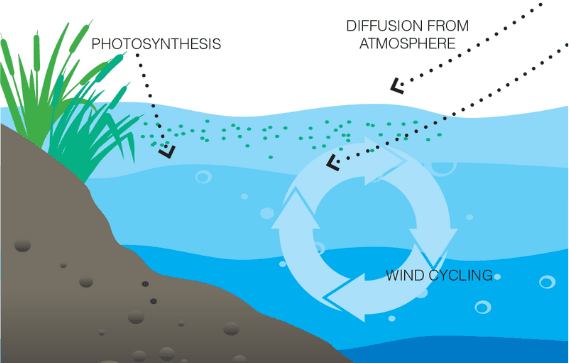
The impact extended beyond a single lesson. In Nathan's biotechnology lab, students applied their learning in new ways, including a final project investigating how different water sources influence dissolved oxygen levels. The image above comes from their project's poster. These kinds of experiences not only deepen content understanding but also build critical thinking and inquiry skills.
QSM’s guidance materials proved invaluable in helping him clearly communicate his vision and needs. His success has since empowered him to pursue additional funding opportunities. After his initial award, he applied again and secured funding for air quality sensors, further expanding hands-on learning in his classroom.
Through QSM, Nathan has not only enhanced his own teaching practice but also created opportunities for students to experience science in a more authentic, engaging way, where curiosity leads to discovery and learning extends far beyond the textbook.
The next QSM funding cycle will be announced soon! Check for updates HERE!